
Tech Time: My Time in Kindergarten
Introduction
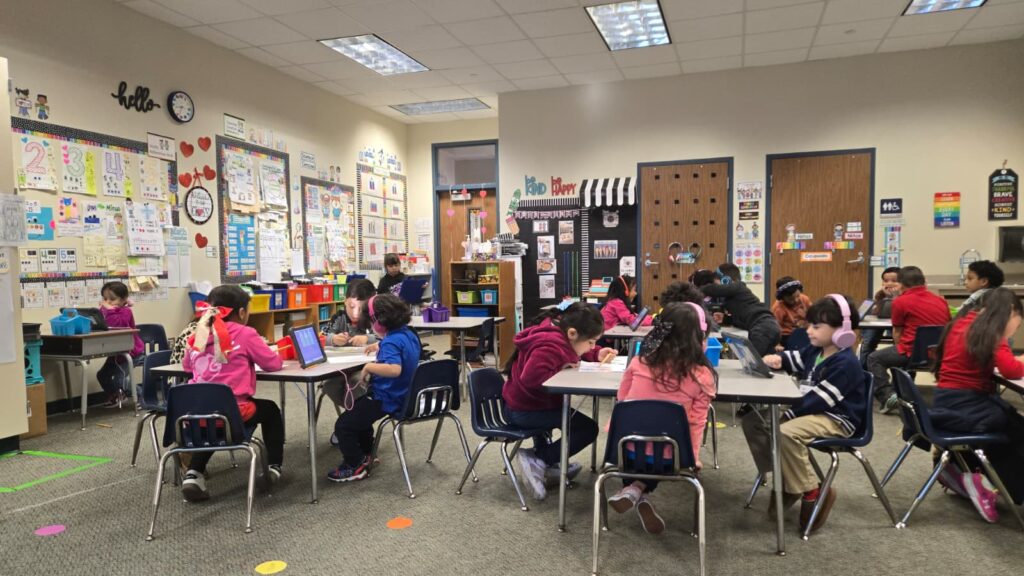
Tech Time: My Time in Kindergarten was developed throughout the Applied Digital Learning (ADL) program as a response to real instructional challenges in my kindergarten classroom. Working in a Title I setting with limited access to devices, I wanted to design an approach to technology that was intentional, sustainable, and focused on student independence rather than screen time alone.
This innovation project reflects how my thinking and practice have evolved since the initial design of my innovation plan in EDLD 5305. Through continued coursework, reflection, and classroom-based application, my understanding of innovation, professional learning, and meaningful technology integration has deepened. This page serves as an update and synthesis of that journey, connecting all components of the project into a cohesive and purposeful whole.
Overview of the Innovation
Tech Time is a classroom-based innovation that integrates QR routines, blended learning structures, and intentional teacher modeling to support student agency and independence in kindergarten. The project also includes a practice-based professional learning model designed to support teachers through implementation, reflection, and refinement rather than traditional “sit and get” professional development.
Components of the Innovation Project
This innovation project is composed of interconnected components that together form a cohesive strategy for integrating technology in early childhood classrooms:
- Innovation Plan (EDLD 5305): Overview of the purpose, context, and design of Tech Time: My Time in Kindergarten.
- BHAG and Purpose Statement: A long-term vision focused on meaningful technology use and student agency.
- Literature Review: Research supporting blended learning, developmentally appropriate technology integration, and student independence.
- Professional Learning Model – Go & Show (EDLD 5389): A practice-based professional learning approach grounded in modeling, implementation, and reflection.
- Implementation Timeline: An eight-week cycle outlining modeling, guided practice, classroom implementation, feedback, and refinement.
- Action Research Design (EDLD 5315): A mixed-methods approach examining the impact of Tech Time routines on student engagement and independence.
- Reflection Artifacts: Ongoing reflections documenting learning, challenges, growth, and instructional decision-making throughout the process.
Each component is linked to provide a clear picture of how the pieces connect and support the broader innovation strategy.
Current Stage of the Innovation
At this stage, the planning and design phases of the innovation project are complete. The core components have been developed, connected, and piloted through classroom routines and professional learning cycles. The next phase of this work focuses on refinement, sustainability, and continued implementation, with an emphasis on reflective practice and collaboration with colleagues.
Reflection on the Learning Process
What Worked
One of the strongest aspects of this innovation was grounding the work in an authentic classroom context. Designing Tech Time around real constraints and real learners made the project immediately relevant and meaningful. The COVA mindset encouraged ownership, flexibility, and reflection, allowing the innovation to evolve naturally rather than follow a rigid plan.
The professional learning model also proved effective. Modeling routines, implementing them in real classrooms, and reflecting on evidence created deeper learning than traditional professional development formats.
What I Could Do Better
While the project developed intentionally, I could have been more consistent in documenting reflections and data from the beginning. Balancing instructional responsibilities with systematic documentation was challenging at times. In future projects, I would establish clearer systems for capturing evidence and reflections in real time.
Key Lessons Learned
This innovation reinforced that meaningful change is non-linear and requires patience, adaptability, and reflection. Innovation is not about perfection but about responsiveness. I also learned that when educators and students have ownership of the learning process, engagement and sustainability increase significantly.
Promoting and Communicating the Innovation
This innovation will be shared through my ePortfolio, collaborative conversations with colleagues, and professional learning opportunities within my school community. Rather than presenting Tech Time as a finished product, it will be shared as an evolving model that invites collaboration and adaptation.
By modeling classroom routines, sharing evidence of practice, and reflecting openly on challenges and successes, this innovation can serve as a foundation for meaningful professional dialogue and shared growth.
Looking Back: What I Would Do Differently
Knowing what I know now, I would begin the project with a narrower initial focus and allow it to scale more intentionally. I would also trust the process earlier, recognizing that uncertainty and iteration are natural and necessary components of innovation.
Applying This Learning to Future Innovations
This project has reshaped how I approach innovation and leadership. Moving forward, I will design future initiatives with sustainability, reflection, and collaboration at the center. The lessons learned through Tech Time will guide my work as I continue to develop learning experiences that empower both students and educators while remaining grounded in authentic classroom practice.
References
Darling-Hammond, L., Hyler, M. E., & Gardner, M. (2017). Effective teacher professional development. Learning Policy Institute. https://learningpolicyinstitute.org/product/effective-teacher-professional-development-report
Gulamhussein, A. (2013). Teaching the teachers: Effective professional development in an era of high stakes accountability. Center for Public Education. https://www.nsba.org/sites/default/files/reports/gulamhussein.pdf
Harapnuik, D. (n.d.). Who owns the ePortfolio? http://www.harapnuik.org/?page_id=6050
Harapnuik, D., Thibodeaux, T., & Cummings, C. (2018). Creating significant learning environments. https://www.covamodel.com
Lowenthal, P. R. (2015). Social scholarship: Reconsidering scholarly practices in the digital age. Learning, Media and Technology, 40(3), 342–357. https://doi.org/10.1080/17439884.2015.1050037