
This video provides a brief overview of my innovation journey, implementation process, and future goals for Tech Time in Kindergarten.

Tech Time: My Time in Kindergarten
was born from a simple but powerful question:
What if technology in kindergarten could build independence instead of dependency?
As a bilingual kindergarten teacher, I noticed that many of my students relied heavily on adult guidance during digital center rotations. While devices were available, intentional structure was missing. I did not want technology to be a passive activity. I wanted it to become a meaningful learning routine that empowered students.
Tech Time is my innovation plan designed to create structured, student-centered digital learning experiences through QR codes, blended rotations, intentional grouping, and clear expectations. The goal is not just technology integration. The goal is student ownership, engagement, and independence.
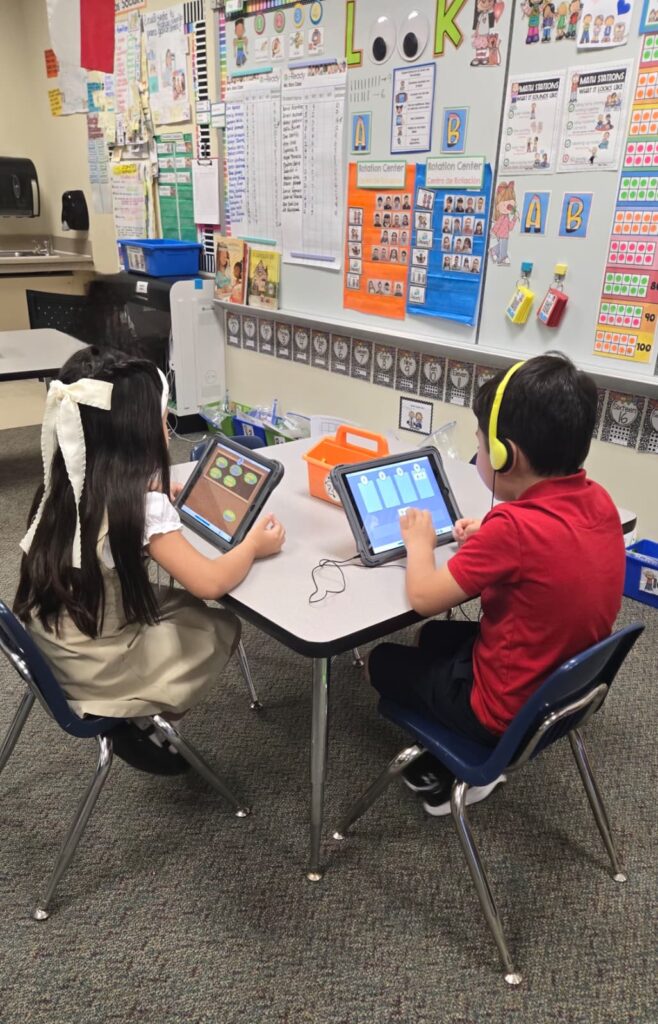
Throughout the Applied Digital Learning program at Lamar University, this innovation has served as the foundation for my research, design, action planning, and professional learning. What started as a classroom routine evolved into a measurable system aligned with engagement theory, formative assessment, and significant learning environments.
“Innovation is not about the device. It is about the design.”
This page documents the journey of that transformation.
Innovation Overview
Tech Time was designed to address a critical gap in early childhood digital learning: the lack of intentional structure during technology-based center rotations. In my classroom, devices were available, but students often depended on adult guidance to navigate digital tasks.
This innovation reframes technology integration as a structured system rather than an isolated activity. By implementing QR-coded tasks, clear rotation routines, intentional grouping, and measurable engagement strategies, Tech Time creates predictable structures that promote independence, focus, and ownership in young learners.
The purpose of this innovation is not simply to increase technology use, but to cultivate student autonomy while maintaining academic rigor and measurable growth.
Components of My Innovation Journey
Tech Time has evolved through multiple stages of research, design, implementation, and reflection. Each component of this journey contributed to the development of a comprehensive innovation strategy.
* Disruptive Innovation Analysis
The foundation of my innovation journey began in EDLD 5305 with an in-depth analysis of disruptive innovation in education. At that time, I initially viewed technology integration as increasing device use in the classroom. However, through studying disruptive innovation frameworks, I began to understand that meaningful change does not come from adding tools, but from redesigning systems.
This assignment challenged me to rethink traditional instructional models and question whether technology was being used to transform learning or simply to support existing routines. I realized that disruption in my classroom would not require more devices. It required intentional structure and a shift toward student ownership.
This conceptual shift became the foundation for Tech Time: My Time in Kindergarten.
* Literature Review: Research That Informed the Design
While disruptive innovation reshaped my thinking about systems and structure, the literature review strengthened the research foundation of Tech Time. Through an in-depth analysis of current research on engagement, student independence, formative assessment, and technology integration, I began to align my innovation with measurable learning outcomes.
The literature helped me move beyond intuition and classroom observation toward evidence-based design. Research on time-on-task and student engagement (Godwin et al., 2021) reinforced the importance of structured learning environments that promote focus and persistence. Studies examining cognitive engagement with technology (Vongkulluksn et al., 2022) supported the alignment between digital independence and measurable academic growth. Additionally, action research frameworks (Mertler, 2020) guided the development of structured data collection and reflective instructional adjustments throughout the innovation process.
This stage of the innovation ensured that Tech Time was not only innovative in concept but grounded in research and aligned with best practices in digital learning environments.
The literature was organized into three guiding themes:
• Intentional Technology Integration in Early Childhood
• Student Independence and Self-Regulated Learning
• Evidence-Based Measurement and Engagement
These themes directly informed the design, implementation, and measurement of Tech Time.
* Research Planning & Design
Before implementing Tech Time, I intentionally designed a research framework to measure its effectiveness in promoting student independence and academic growth.
Rather than introducing a new digital routine without evaluation, I developed structured measurement tools supported by both quantitative and qualitative data sources.
By combining academic performance data with structured behavioral observations, Tech Time is evaluated through multiple sources of evidence rather than assumption.
Data Collection Tools
To operationalize this research framework, I implemented the following tools:
1. Weekly i-Ready Lesson Tracking (Quantitative Measure)
A structured Excel-based tracking system was used to monitor the number of i-Ready lessons completed by each student on a weekly basis. This tool provided measurable data on consistency, persistence, and digital task completion trends over time.
Sample weekly i-Ready lesson tracking system used to monitor student consistency and digital task completion. Student identifiers have been removed to protect privacy.
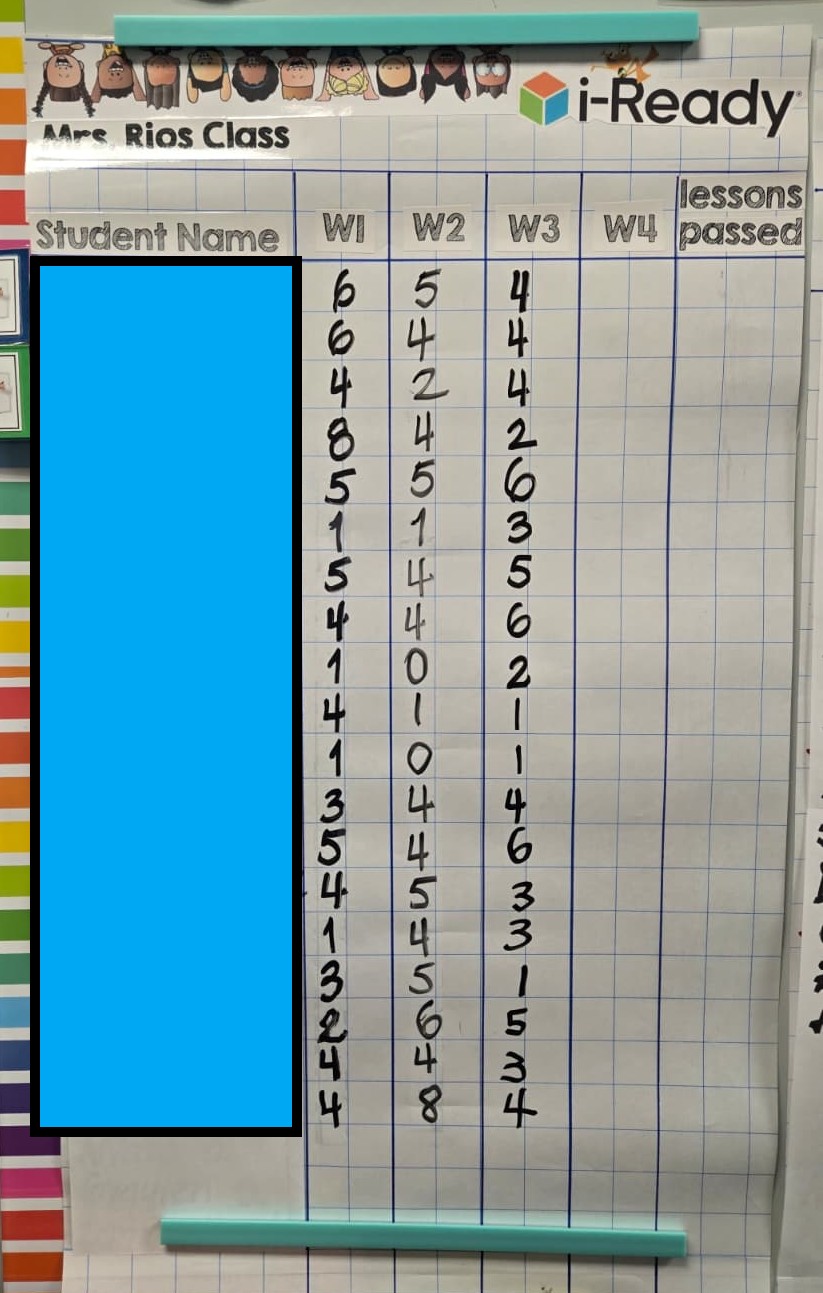
This tracking system served as one quantitative indicator of student independence. Increased consistency in weekly lesson completion suggested growth in self-management, persistence, and digital task initiation during Tech Time rotations.
2. Independence Observation Checklist (Qualitative Behavioral Measure)
A structured classroom observation instrument was developed to document specific independence behaviors during Tech Time rotations, including task initiation, engagement, problem-solving, and independent transitions.
3. Diagnostic Growth Data
i-Ready diagnostic growth scores were used as performance indicators aligned with measurable academic outcomes.
* Reflection & Growth Through the Innovation Process
One of the most significant instructional shifts was the intentional teaching of digital independence expectations. Rather than assuming students understood how to behave during technology rotations, I explicitly modeled, practiced, and visually reinforced these behaviors through structured anchor charts and consistent routines.
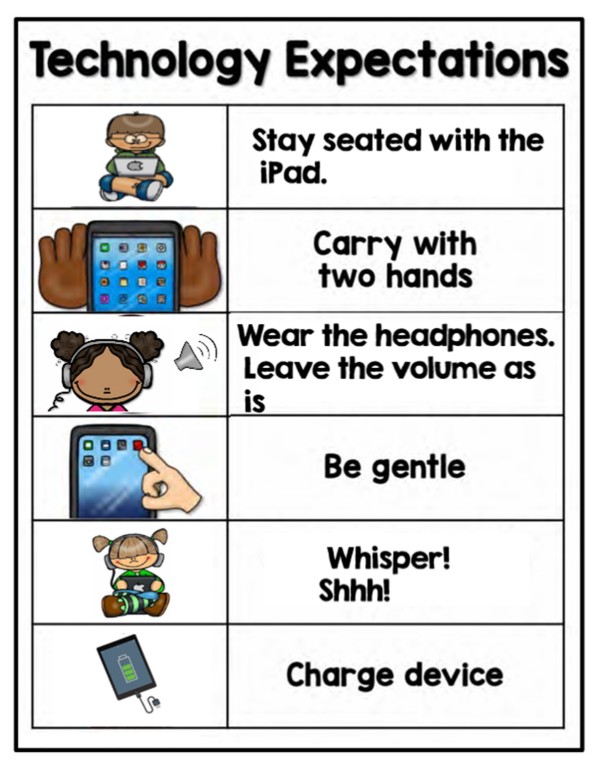
Sample Technology Expectations anchor chart used to explicitly teach and reinforce independent digital behavior during Tech Time rotations.
What Worked
The most impactful aspect of Tech Time has been the implementation of clear digital structures supported by QR-coded tasks, visual expectations, and consistent routines. Students demonstrated increased independence in accessing digital platforms, initiating tasks, and transitioning between centers.
Data collected through weekly i-Ready lesson tracking and structured observation checklists revealed measurable growth in consistency, persistence, and self-management behaviors. These results confirmed that structured design, rather than increased device use alone, supports meaningful student independence.
Data-Informed Adjustments
As data accumulated, I began using lesson completion trends and independence checklist scores to adjust instructional decisions. Students demonstrating lower consistency received additional scaffolds and guided modeling, while students exhibiting higher independence were gradually provided greater autonomy during rotations.
This ongoing analysis reinforced the importance of responsive instruction informed by evidence rather than assumption.
What Could Be Improved
If I were to begin this process again, I would formalize the Action Research Design earlier in the implementation phase. While data collection tools were intentionally developed, establishing the full methodological framework at the outset would have strengthened alignment and efficiency.
Lessons Learned
This experience reinforced that innovation is not about introducing new tools, but about designing systems with purpose. Structure fosters independence. Measurement strengthens credibility. Reflection sustains growth.
I also learned that sustainable innovation requires patience, clarity of vision, and ongoing adjustment.
Where I Am Now
At this stage, the literature review and research planning framework have been completed, and structured data collection is actively informing instructional practice. The formal Action Research Design and extended data analysis phase are currently in progress as part of my continued coursework.
Applying This Learning to Future Innovations
This innovation has reshaped how I approach instructional design. In future initiatives, I will begin with clearly defined measurable outcomes, structured data systems, and collaborative planning from the outset. I will continue prioritizing student ownership, evidence-based adjustments, and ethical digital leadership.
*Communication & Promotion Plan

Tech Time: My Time in Kindergarten was designed not only as a classroom innovation, but as a scalable instructional model that can support structured digital learning across grade levels.
Sharing with Colleagues
I plan to share the Tech Time framework through grade-level collaboration meetings and professional learning communities (PLCs). By modeling the structured rotation system and sharing tracking tools, I aim to demonstrate how intentional design increases student independence and measurable engagement.
Modeling Through “Go & Show”
Using the principles of alternate professional learning, I intend to support colleagues through demonstration-based sessions where teachers can observe the system in action. Rather than traditional sit-and-get training, this model emphasizes active participation, reflection, and contextualized application.
Resource Sharing & Digital Access
A digital resource hub will be created to provide access to QR templates, tracking tools, observation checklists, and implementation guides. This will allow educators to adapt the framework to their own classroom needs while maintaining structured consistency.
Long-Term Vision
As Tech Time continues to evolve, my goal is to support campus-wide conversations around purposeful technology integration. By aligning digital routines with measurable outcomes and structured independence goals, this innovation has the potential to move beyond a single classroom and contribute to broader instructional improvement.
References
Godwin, K. E., Seltman, H., Almeda, M., Tai, H. L., Baker, R. S., & Fisher, A. V. (2021). The elusive relationship between time on-task and learning: Not simply an issue of measurement. Educational Psychology, 41(4), 502–519. https://doi.org/10.1080/01443410.2020.1766749
Mertler, C. A. (2020). Action research: Improving schools and empowering educators (6th ed.). SAGE Publications.
Vongkulluksn, V. W., Lu, L., & Nelson, M. J. (2022). Cognitive engagement with technology scale: A validation study. Educational Technology Research and Development, 70(2), 419–445. https://doi.org/10.1007/s11423-022-10083-4